
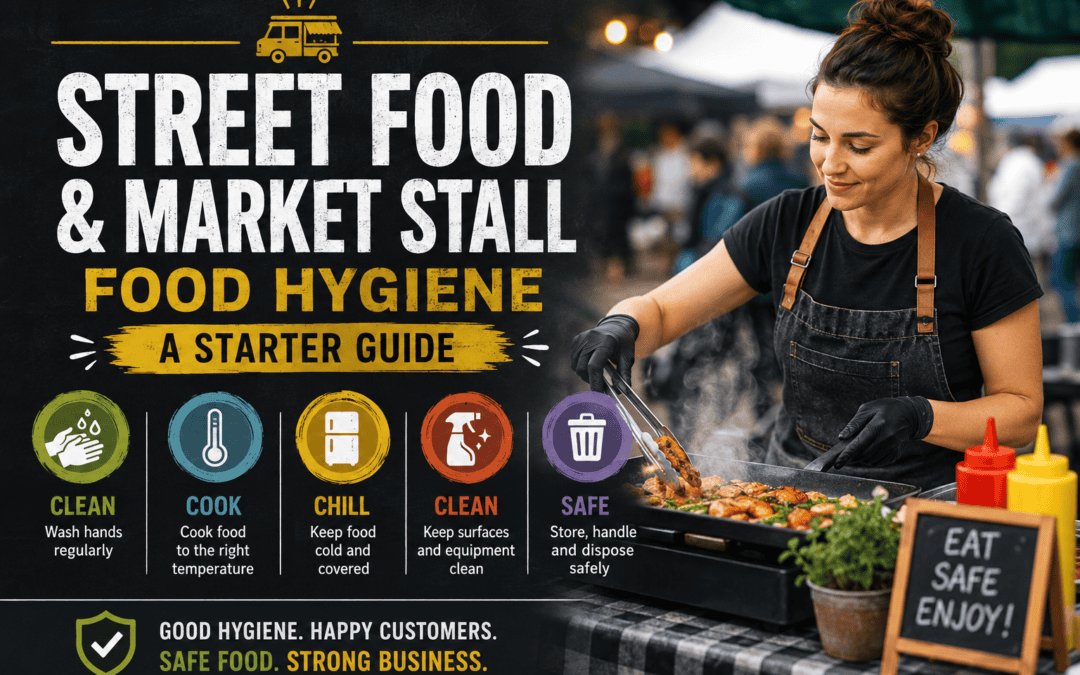
Street Food and Market Stall Food Hygiene: A Starter Guide
Trading from a gazebo looks casual. A folding table, a couple of crates, a queue forming by eleven.
The law does not see it that way, though. Your stall counts as a food premises for as long as it stands, and an officer can walk up to it exactly as they would walk into a restaurant.
So here is what market and street food traders need, written for people working without plumbing, walls or a storeroom.
Registration and a pitch licence are different things
Traders confuse these constantly; therefore, it is worth separating them clearly.
Food business registration is free, it happens once, and you register with the council covering the address where you store and prepare your food. That is usually your home or your prep kitchen rather than the market. Do it at least 28 days before you trade, through the FSA registration service. Our guide to registering a food business covers the form itself.
A street trading or market stall licence is separate; it costs money, and you need one for each place you trade. Councils issue temporary or casual licences for one-off events and permanent licences for regular pitches, as GOV.UK explains.
Some councils go further. Camden, for example, requires food traders to hold a hygiene rating of 3 or above before granting a street trading licence.
Handwashing is the thing officers check first
If you handle open high-risk food, meaning anything unwrapped such as meats, wraps, curries or filled rolls, you need a proper hand wash facility.
That means hot and cold water, soap and hygienic drying, immediately accessible while you work. Portable units are cheap to buy or hire, and they solve the problem entirely.
Hand wipes and gel do not count as a substitute. Officers state this plainly, so do not turn up hoping to argue it.
Low-risk traders selling bottled, jarred or wrapped goods have more flexibility, and a bowl of frequently changed water with wipes may be acceptable. Check with the council before you assume you qualify.
Also, if you wash utensils on the stall, you need a second sink separate from the hand wash.
Getting food to the pitch and keeping it right there
Your cold chain starts at home and ends when you hand the food over.
Load chilled items last and unload them first. Use proper cool boxes with ice packs rather than a shopping bag, and probe something on arrival to check where you actually are.
Once trading, hot food stays at 63°C or above and chilled food at 8°C or below, with 5°C giving you margin. Keep a probe on the stall and write your readings down, because a market officer will ask.
Thawed food gets used, refrigerated, or thrown away. Never refreeze it.
Weather is a food safety issue
This is the part unique to outdoor trading, and it catches new traders every season.
Sun turns a covered stall into an oven, so chilled displays drift fast, and buttercream collapses. Wind lifts gazebos, blows dust across open food and knocks over anything unsecured. Rain finds every gap in a canopy.
Therefore, weight your gazebo properly, keep open food covered and shaded, and bring more ice than you think you need. On a genuinely bad day, pulling high-risk items from the menu beats serving something you are unsure about.
Cash, phones and bare hands
Money is filthy, and a stall usually has one person doing everything.
Ideally, split the roles so one person handles cash and another handles food. Where you cannot, wash your hands properly between the two, every time.
Card readers reduce the problem. Your phone does not, so keep it away from the food and clean it if it lives on the stall.
Samples, tastings and alcohol
Offering tastings is good selling, but it brings rules.
Keep samples covered, use tongs or cocktail sticks rather than fingers, and refresh them often rather than letting a tray sit out all afternoon. Label allergens on the sample as clearly as on the product.
If you sample or sell alcohol, you will usually need a Temporary Event Notice from the council unless the organiser covers you under their own licence. Apply well ahead, since notice periods apply.
What organisers will ask before giving you a pitch
Markets and festivals have become far stricter, so expect to provide several things.
They will want your food business registration details and the name of your registering authority. They will usually want to see your food hygiene rating, and many events set a minimum of 4 or 5. They will ask for public liability insurance, commonly five million pounds. They will often ask for your risk assessment, your gas safety certificate if you use LPG, and your staff training certificates.
Get that folder together once, and you can apply for pitches in minutes rather than evenings.
Fire, gas and waste
Cooking outdoors under canvas concentrates risk, so treat the non-food hazards seriously.
Store LPG cylinders upright, in open air, away from ignition sources. Carry a fire blanket, plus a Class F extinguisher if you fry and an appropriate extinguisher for other risks. Keep the back of the stall clear.
For waste, use bins with close-fitting lids and take sealed bags away with you unless the organiser provides collection. Waste water, oil and fat go into secure containers and get disposed of properly. Tipping any of it on the ground is an offence, and it gets photographed.
Keep your paperwork in the crate
Officers visit markets during trading, so paperwork at home is no use.
Carry your registration confirmation, your training certificates, your allergen information matching today’s menu, your temperature records and your insurance. A copy of your most recent inspection report helps too, since a recent clean report often makes an on-site check very brief.
Our guides to EHO inspections and mobile catering units cover the rest.
The training every stall needs
Anyone handling open food on your stall needs Level 2, and many councils write that into their licence conditions.
Level 2 Food Hygiene and Safety carries CPD accreditation and Highfield quality endorsement, costs £20, and takes around four to five hours as a guide. Your licence runs for twelve months, and you receive the certificate the same day you pass, which suits taking on weekend help at short notice.
First market coming up? Ring us; the advice is free
Traders often need one specific question answered rather than a whole guide.
Tell us what you sell and where you trade. Then we will tell you honestly which course you and your helpers need, and quote bulk pricing if you are staffing a busy season.
Call our landline on 02034884930 for free advice, or email info@gvec.co.uk.
Questions traders send us
Do I register with the council where I trade?
No. Register where you store and prepare your food, then licence each pitch separately.
Can I use hand sanitiser instead of a wash basin?
Not for open high-risk food. Officers require hot and cold running water.
Do casual weekend helpers need certificates?
Yes, if they handle open food. Book them before the event.
Does my hygiene rating matter for getting pitches?
Increasingly, yes. Many events set a minimum of 4 or 5.
What insurance do organisers expect?
Public liability, commonly five million pounds. Check each event’s terms.
The night before your next pitch
Charge the probe. Fill the hand wash unit. Freeze the ice packs. Print today’s allergen list. Check the folder has your certificates and insurance in it.
Five minutes of preparation removes most of what goes wrong at seven in the morning.
Browse our food hygiene courses, or call 02034884930 before your next market.