
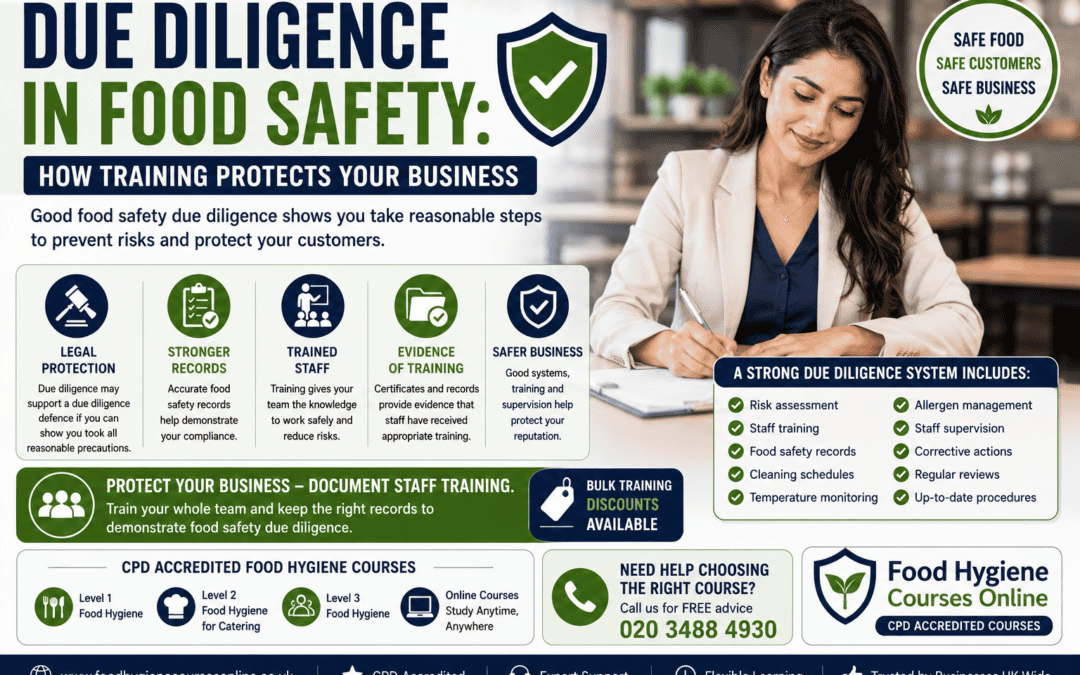
Due Diligence in Food Safety: How Training Protects Your Business
Running a food business involves much more than preparing and serving good food. Whether you own a restaurant, takeaway, café, bakery, catering company, food manufacturing business or mobile food unit, you have a legal responsibility to make sure the food you provide is safe for your customers.
One of the most important concepts in UK food law is food safety due diligence. If something goes wrong, being able to demonstrate that your business has taken all reasonable precautions and exercised proper care can make a significant difference.
Many food business owners ask questions such as:
- What is food safety due diligence?
- What is a due diligence defence?
- What records should I keep?
- Does staff training help protect my business?
- How can I prove my employees have received appropriate training?
This guide explains how due diligence works in practice, why evidence of training matters, and how maintaining proper food safety records can help support legal compliance and improve food safety standards.
At Food Hygiene Courses Online, we provide CPD-accredited online food hygiene courses for food handlers, supervisors and businesses across the UK. If you’re unsure which course is right for your employees, our experienced team offers FREE course selection advice.
Call us on 020 3488 4930 for friendly advice before choosing your course.
What Is Food Safety Due Diligence?
The term food safety due diligence refers to the reasonable steps a food business takes to prevent food safety problems and comply with food law.
Rather than waiting for something to go wrong, due diligence is about identifying risks, putting suitable controls in place, and demonstrating that your business actively works to protect consumers.
A strong due diligence system may include:
- Staff food hygiene training
- Food safety management procedures
- Cleaning schedules
- Temperature monitoring
- Allergen controls
- Pest control arrangements
- Equipment maintenance
- Regular supervision
- Accurate food safety records
Together, these measures help reduce the risk of food contamination and show that your business takes its legal responsibilities seriously.
What Is a Due Diligence Defence?
One of the most important legal protections available to food businesses is the due diligence defence.
Under certain circumstances, food businesses may rely on this defence if they can demonstrate that they took all reasonable precautions and exercised all due diligence to avoid committing an offence.
However, this should not be viewed as a way to avoid responsibility. A due diligence defence depends on the facts of each case and whether the business can show that appropriate systems, procedures and controls were genuinely in place.
For example, if an employer can provide evidence that:
- Employees received suitable food hygiene training.
- Food safety procedures were documented.
- Staff were supervised appropriately.
- Equipment was maintained correctly.
- Records were kept accurately.
- Risks were reviewed regularly.
This may help demonstrate that the business had taken reasonable steps to manage food safety risks.
Ultimately, whether a due diligence defence succeeds depends on the specific circumstances and the evidence available.
Why Due Diligence Matters for Every Food Business
Food safety incidents can have serious consequences.
These may include:
- Food poisoning outbreaks
- Customer complaints
- Damage to business reputation
- Enforcement action
- Financial losses
- Business disruption
- Legal proceedings
A well-managed due diligence system helps reduce these risks by encouraging consistent food safety practices throughout the business.
It also provides reassurance to customers, employees, and enforcement officers that food safety is taken seriously.
For many businesses, investing in prevention is considerably less costly than dealing with the consequences of a food safety incident.
The Importance of Food Safety Records
Good record keeping is a key part of demonstrating due diligence.
Without records, it may be difficult to show that important food safety procedures were actually followed.
Depending on the type of business, useful food safety records may include:
- Staff training records
- Temperature monitoring logs
- Cleaning schedules
- Delivery checks
- Pest control reports
- Equipment maintenance records
- Food safety management documentation
- Allergen information
- Corrective action records
Keeping organised records not only supports compliance but also helps businesses identify trends and improve food safety performance over time.
Why Evidence of Training Is So Important
Providing training is only part of your responsibility as an employer.
Being able to demonstrate that employees have received appropriate instruction is equally important.
This is why evidence of training plays such a valuable role in any due diligence system.
Training records may include:
- Course certificates
- Attendance registers
- Induction training records
- Refresher training dates
- Competency assessments
- Signed training acknowledgements.
These documents help show that employees have received suitable food safety instruction relevant to their role.
They can also provide valuable evidence during an Environmental Health inspection or internal audit.
Staff Training Is One of Your Strongest Defences
Food hygiene training helps employees understand not only what they should do, but why food safety procedures are so important.
Proper training supports staff in:
- Preventing cross-contamination
- Maintaining good personal hygiene
- Handling allergens safely
- Following cleaning procedures
- Controlling food temperatures
- Reporting food safety concerns
- Understanding workplace responsibilities
Training also helps managers supervise staff more effectively and encourages a positive food safety culture throughout the business.
For this reason, many businesses include regular food hygiene training as one of the foundations of their overall due diligence strategy.
Building a Culture of Compliance
Due diligence is not simply about keeping paperwork in a filing cabinet. It is about creating a workplace where food safety becomes part of everyday operations.
When employees understand their responsibilities and receive regular training, they are more likely to follow safe working practices consistently.
A culture of compliance also makes it easier for businesses to adapt to changes in legislation, introduce new procedures, and prepare confidently for Environmental Health inspections.
How to Build an Effective Food Safety Due Diligence System
A strong food safety due diligence system is not created overnight. It develops through consistent management, well-trained staff, and documented procedures that are reviewed regularly.
Every food business is different, but an effective system should normally include:
- Appropriate food hygiene training for all staff.
- Clear food safety policies and procedures.
- Food safety management based on your business activities.
- Regular supervision of employees.
- Accurate food safety records.
- Routine cleaning and maintenance schedules.
- Temperature monitoring and recording.
- Allergen management procedures.
- Regular reviews and updates to food safety practices.
The aim is to ensure that food safety becomes part of your daily operations rather than something considered only during inspections.
The Role of Managers and Supervisors
Managers and supervisors play a crucial role in maintaining food safety standards.
While food handlers need appropriate training for their day-to-day duties, supervisors are responsible for ensuring procedures are followed consistently, staff are supported, and food safety risks are identified promptly.
For this reason, many businesses choose Level 3 Food Hygiene Training for:
- Restaurant managers
- Head chefs
- Kitchen supervisors
- Catering managers
- Food production supervisors
- Food business owners
Level 3 training provides a broader understanding of food safety management, legal responsibilities, risk assessment, and staff supervision.
Learn more about our Level 3 Food Hygiene Course:
https://www.foodhygienecoursesonline.co.uk/product/food-safety-level-3/
Why Business-Wide Training Makes Sense
Providing consistent training across your workforce is one of the simplest ways to strengthen your due diligence procedures.
When every employee receives the same high standard of instruction, businesses benefit from:
- Consistent food safety practices.
- Improved staff confidence.
- Better teamwork.
- Reduced risk of food safety incidents.
- Easier induction of new employees.
- Greater confidence during Environmental Health inspections.
For organisations with multiple employees or several sites, structured business training also helps standardise procedures across the business.
Discover our Business Food Hygiene Training solutions for employers looking to train multiple members of staff:
https://www.foodhygienecoursesonline.co.uk/
Our flexible online courses make it easy to train your workforce at a time that suits your business.
Common Mistakes That Weaken Due Diligence
Even businesses with good intentions can unintentionally weaken their due diligence by overlooking important areas.
Common mistakes include:
- Failing to provide induction training for new employees.
- Not keeping food safety records up to date.
- Assuming experienced staff no longer need refresher training.
- Losing training certificates or attendance records.
- Not reviewing food safety procedures regularly.
- Failing to supervise employees effectively.
- Providing training without checking staff understanding.
- Ignoring changes in food safety legislation or business procedures.
Avoiding these mistakes can strengthen your overall food safety management system and reduce the likelihood of compliance issues.
Why Documentation Is Just as Important as Training
Training helps employees understand safe food handling, but documentation helps demonstrate that the training actually took place.
Keeping organised records of food hygiene training can provide valuable evidence during inspections or audits.
Useful documents include:
- Training certificates.
- Induction records.
- Refresher training schedules.
- Staff competency assessments.
- Signed training acknowledgements.
- Food safety policy updates.
Maintaining these records supports your business’s commitment to continuous improvement and responsible food safety management.
Frequently Asked Questions
What is food safety due diligence?
Food safety due diligence refers to the reasonable precautions and systems a food business puts in place to help prevent food safety problems and comply with legal responsibilities.
What is a due diligence defence?
A due diligence defence may be available in certain legal situations if a business can demonstrate that it took all reasonable precautions and exercised appropriate care. Whether the defence applies depends on the specific facts of each case and the available evidence.
Why are food safety records important?
Food safety records help demonstrate that procedures have been followed consistently. They also support inspections, internal audits, and continuous improvement.
Does staff training help support due diligence?
Yes. Appropriate food hygiene training, together with supervision and accurate records, forms an important part of a business’s overall due diligence arrangements.
What training should supervisors complete?
Supervisors and managers often benefit from Level 3 Food Hygiene Training, which covers food safety management, legal responsibilities and staff supervision in greater depth.
Official Sources of Information
For authoritative guidance on food safety responsibilities and legislation, visit:
Food Standards Agency (FSA)
Food Safety Act 1990 and related food legislation
https://www.legislation.gov.uk/
These official resources provide comprehensive information on food law, food safety responsibilities, and regulatory requirements for food businesses.
Protect Your Business with the Right Training
Building a strong food safety due diligence system is about more than meeting legal expectations. It is about protecting your customers, supporting your employees, and safeguarding the future of your business.
At Food Hygiene Courses Online, we provide CPD-accredited online food hygiene courses for individuals, supervisors and businesses across the UK.
Whether you need training for a single employee or your entire workforce, we can help you choose the most appropriate course for your organisation.
Why Choose Food Hygiene Courses Online?
- CPD Accredited online courses
- Flexible learning at your own pace
- Suitable for individuals and businesses
- Business and team training solutions
- Level 1, Level 2 and Level 3 courses
- Friendly UK-based support
- FREE course selection advice
- Certificates available after successful completion
🌐 Website
https://www.foodhygienecoursesonline.co.uk/
📞 FREE Course Advice
020 3488 4930
Protect your business – document staff training.
Not sure which course is right for your employees or management team? Call our friendly advisers today for FREE course advice. We’ll help you select the most suitable CPD-accredited training to support your food safety responsibilities and strengthen your due diligence procedures.