
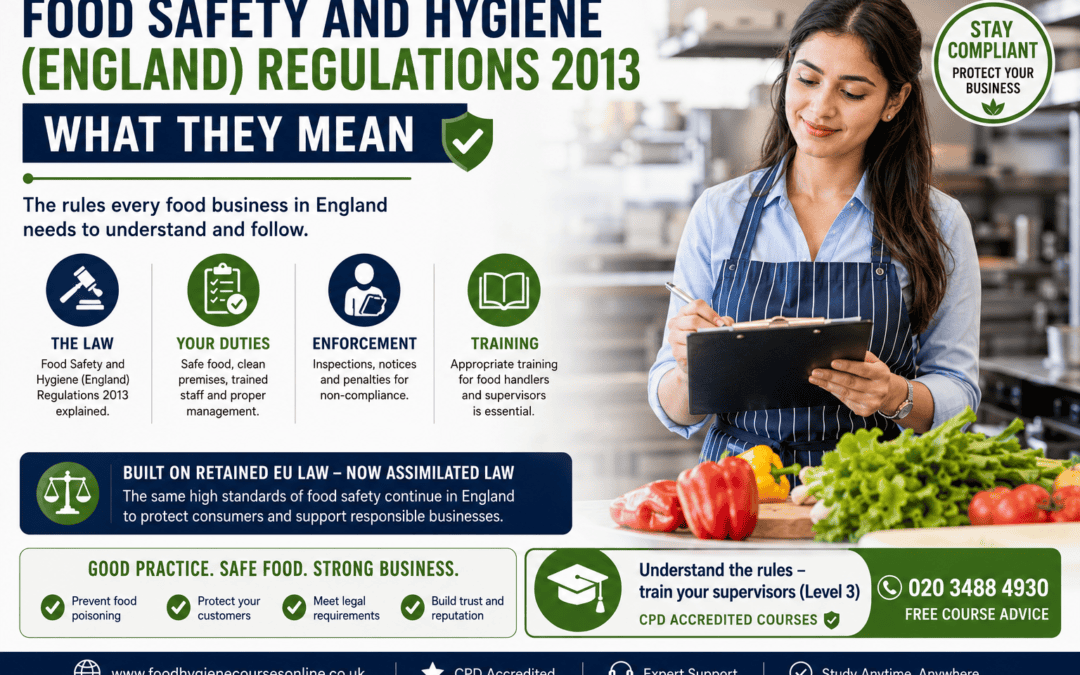
Food Safety and Hygiene (England) Regulations 2013: What They Mean
If you own a restaurant, café, takeaway, food manufacturing business, or even a home-based food business, understanding the Food Safety and Hygiene (England) Regulations 2013 is essential. These regulations form an important part of food law in England and help ensure that food sold to the public is safe, hygienic and produced to recognised standards.
Many food business owners have questions such as:
- What are the Food Safety and Hygiene (England) Regulations 2013?
- Do these regulations apply to my business?
- What are my legal responsibilities?
- How are these regulations enforced?
- What training do my staff need?
If these questions sound familiar, you’re not alone. The legislation can appear technical, but the principles behind it are straightforward. The regulations are designed to protect consumers, improve food hygiene standards, and help businesses operate safely.
At Food Hygiene Courses Online (https://www.foodhygienecoursesonline.co.uk/), we provide CPD-accredited online food hygiene courses for food handlers, supervisors and food business owners across the UK.
If you are unsure which course is right for you or your staff, our experienced team offers FREE course selection advice before you enrol.
What Are the Food Safety and Hygiene (England) Regulations 2013?
The Food Safety and Hygiene (England) Regulations 2013 provide the legal framework for enforcing food hygiene requirements in England.
They work alongside other food legislation, including the Food Safety Act 1990, and support retained food hygiene rules that originated from European legislation. Following legislative changes after Brexit, some references to retained EU law have been updated under the UK’s system of assimilated law, but the practical food hygiene responsibilities for businesses remain broadly similar.
The regulations cover important areas such as:
- Food hygiene standards
- Food safety management
- Food business registration
- Hygiene inspections
- Enforcement powers
- Training and supervision
- Offences and penalties
Whether you run a large catering company or a small home bakery, these regulations help ensure that food is prepared and supplied safely.
Who Must Comply with These Regulations?
The regulations apply to almost every food business operating in England.
This includes:
- Restaurants
- Cafés
- Takeaways
- Hotels
- Pubs serving food.
- Bakeries
- Food manufacturers
- Catering companies
- Schools
- Nurseries
- Care homes
- Mobile catering units
- Market stalls
- Home-based food businesses
If your business prepares, stores, serves, transports or sells food to the public, these regulations are likely to apply.
Understanding your responsibilities is an important step towards protecting your customers and maintaining compliance.
Why Are These Regulations Important?
Food safety legislation exists for one simple reason: to protect public health.
Unsafe food can cause food poisoning, allergic reactions, and other serious health problems.
The regulations help businesses reduce these risks by promoting good food hygiene practices, including:
- Maintaining clean premises
- Preventing contamination
- Safe food storage
- Effective temperature control
- Proper cleaning procedures
- Good personal hygiene
- Appropriate staff training
Following these principles not only protects consumers but also helps businesses build trust and maintain a good reputation.
Retained EU Law and Assimilated Law Explained
When researching food hygiene legislation, you may come across terms such as retained EU law and assimilated law.
These terms can be confusing, but the basic idea is relatively straightforward.
When the UK left the European Union, many existing EU food safety rules were retained in UK law to ensure there was no gap in food safety protection. These were known as retained EU law.
Since 2024, many of these retained provisions have been incorporated into the UK’s legal framework as assimilated law. While the terminology has changed, the practical responsibilities for food businesses remain largely the same.
In other words, food businesses must still maintain appropriate hygiene standards, implement food safety procedures, and ensure staff receive suitable food hygiene training.
How Are the Regulations Enforced?
The Food Safety and Hygiene (England) Regulations 2013 are enforced primarily by local authorities.
Environmental Health Officers (EHOs) and authorised officers carry out inspections to check that food businesses comply with the law.
During an inspection, an officer may review:
- Food preparation areas
- Cleaning standards
- Temperature records
- Food storage
- Pest control
- Food safety management systems
- Staff knowledge
- Training records
Inspectors are not simply looking for certificates. They want to see that food safety procedures are understood and followed consistently.
This is why businesses should ensure staff receive appropriate instruction and practical training.
What Are the Responsibilities of Food Business Operators?
Food business operators have legal responsibilities under the regulations.
These include ensuring that:
- Food supplied to customers is safe.
- Premises are clean and well-maintained.
- Food contamination risks are controlled.
- Appropriate food safety management systems are in place.
- Employees receive suitable supervision, instruction, and training.
- Food allergens are managed correctly.
- Records are maintained where appropriate.
Meeting these responsibilities helps businesses protect customers while reducing the likelihood of enforcement action.
Why Food Hygiene Training Is Essential
One of the most effective ways to comply with food hygiene regulations is by ensuring employees receive appropriate food hygiene training.
Training helps staff understand:
- Safe food handling
- Personal hygiene
- Cleaning procedures
- Temperature control
- Cross-contamination prevention
- Food allergen awareness
- Legal responsibilities
Although the regulations generally require appropriate training rather than a specific certificate, many employers choose recognised food hygiene courses because they provide evidence that staff have received structured training.
For most food handlers, Level 2 Food Hygiene for Catering is the recommended starting point, while supervisors and managers often require Level 3 Food Hygiene.
In the next section, we’ll explain the role of Level 3 training, food hygiene consultancy, enforcement powers and the practical steps businesses can take to remain compliant with the Food Safety and Hygiene (England) Regulations 2013.
Why Level 3 Food Hygiene Training Matters
While every food handler should receive training appropriate to their role, supervisors and managers have additional responsibilities. They are expected to oversee food safety procedures, monitor staff, identify potential risks and help ensure the business complies with food hygiene legislation.
For this reason, many businesses choose Level 3 Food Hygiene Training for:
- Restaurant managers
- Head chefs
- Kitchen supervisors
- Catering managers
- Food business owners
- Team leaders
Level 3 training provides a deeper understanding of food safety management, legal responsibilities, hazard control and staff supervision.
Explore our Level 3 Food Hygiene Course:
https://www.foodhygienecoursesonline.co.uk/level-3-food-hygiene/
Food Hygiene Consultancy for Businesses
Understanding food law can sometimes feel overwhelming, particularly for new businesses or those preparing for an Environmental Health inspection.
Professional food hygiene consultancy can help businesses:
- Understand legal responsibilities.
- Develop food safety procedures.
- Improve hygiene standards.
- Review existing systems.
- Prepare for inspections.
- Train employees effectively.
Whether you operate a café, takeaway, care home, nursery or food manufacturing business, expert advice can help reduce compliance risks and improve confidence.
Learn more about our Food Hygiene Consultancy Services:
https://www.foodhygienecoursesonline.co.uk/food-hygiene-consultancy/
Our experienced team can also recommend the most suitable food hygiene training for your staff.
What Happens If a Business Does Not Comply?
Failure to comply with the Food Safety and Hygiene (England) Regulations 2013 can have serious consequences.
Depending on the circumstances, enforcement officers may take action such as:
- Providing advice or warnings
- Issuing Hygiene Improvement Notices
- Serving Hygiene Emergency Prohibition Notices
- Seizing unsafe food
- Prosecuting serious offences
- Imposing fines
- Closing food businesses where there is an immediate risk to public health.
The action taken will usually depend on the seriousness of the breach and the level of risk presented to consumers.
Most businesses can avoid enforcement by maintaining good hygiene standards, training staff appropriately and addressing issues promptly.
Practical Tips for Staying Compliant
Meeting your legal responsibilities doesn’t need to be complicated. Good food safety habits should become part of your everyday routine.
Here are some practical steps:
✓ Keep food preparation areas clean.
✓ Wash hands regularly and correctly.
✓ Prevent cross-contamination.
✓ Store food at safe temperatures.
✓ Monitor refrigeration and cooking temperatures.
✓ Keep cleaning schedules up to date.
✓ Manage allergens carefully.
✓ Keep food safety records where appropriate.
✓ Train new employees before they begin handling food.
✓ Refresh staff training regularly.
By following these simple practices, businesses can reduce food safety risks and demonstrate a positive approach to compliance.
Why Choose Food Hygiene Courses Online?
At Food Hygiene Courses Online, we are committed to helping food businesses understand their legal responsibilities and improve food safety standards.
Our online courses are designed to be practical, flexible and suitable for businesses of all sizes.
When you choose us, you’ll benefit from:
- CPD Accredited food hygiene courses
- 100% online learning
- Study at your own pace
- Instant course access
- Certificates after successful completion
- Suitable training for individuals and teams
- Friendly UK-based support
- FREE course selection advice
Whether you need training for yourself or your employees, we’ll help you choose the most appropriate course.
Frequently Asked Questions
Do the Food Safety and Hygiene (England) Regulations 2013 still apply?
Yes. The regulations continue to apply in England and remain an important part of the legal framework governing food hygiene and food safety.
What is assimilated law?
Assimilated law is the term now used for many legal provisions that originated from retained EU law. For food businesses, the practical food hygiene responsibilities remain broadly the same.
Do food handlers legally need a food hygiene certificate?
The law requires food handlers to receive appropriate supervision, instruction and training. While a specific certificate is not always legally required, completing a recognised food hygiene course is one of the most effective ways to demonstrate that suitable training has been completed.
Which food hygiene course should supervisors complete?
Supervisors and managers are often best suited to Level 3 Food Hygiene Training, as it covers food safety management and legal responsibilities in greater detail.
Where can I find official guidance?
The best sources of information are the Food Standards Agency (FSA) and legislation.gov.uk, which publish guidance and the full text of relevant legislation.
Official Sources of Information
For reliable guidance on food hygiene law and business responsibilities, visit:
Food Standards Agency (FSA)
The Food Safety and Hygiene (England) Regulations 2013
https://www.legislation.gov.uk/uksi/2013/2996/contents/made
These sources provide detailed information about food hygiene legislation, enforcement and business responsibilities.
Understand the Rules – Protect Your Business
Understanding the Food Safety and Hygiene (England) Regulations 2013 is an important part of running a successful food business.
By maintaining high hygiene standards, training staff appropriately and following recognised food safety procedures, you can help protect your customers while demonstrating compliance with the law.
At Food Hygiene Courses Online, we provide CPD-accredited online food hygiene courses for food handlers, supervisors and business owners throughout the UK.
If you’re unsure whether you need Level 2 Food Hygiene, Level 3 Food Hygiene, or professional food hygiene consultancy, we’re here to help.
🌐 Website
https://www.foodhygienecoursesonline.co.uk/
📞 Free Course Advice
020 3488 4930
Our friendly team offers FREE advice to help you choose the right course for your role or business.
Understand the rules, strengthen your food safety knowledge and train your supervisors with confidence.