
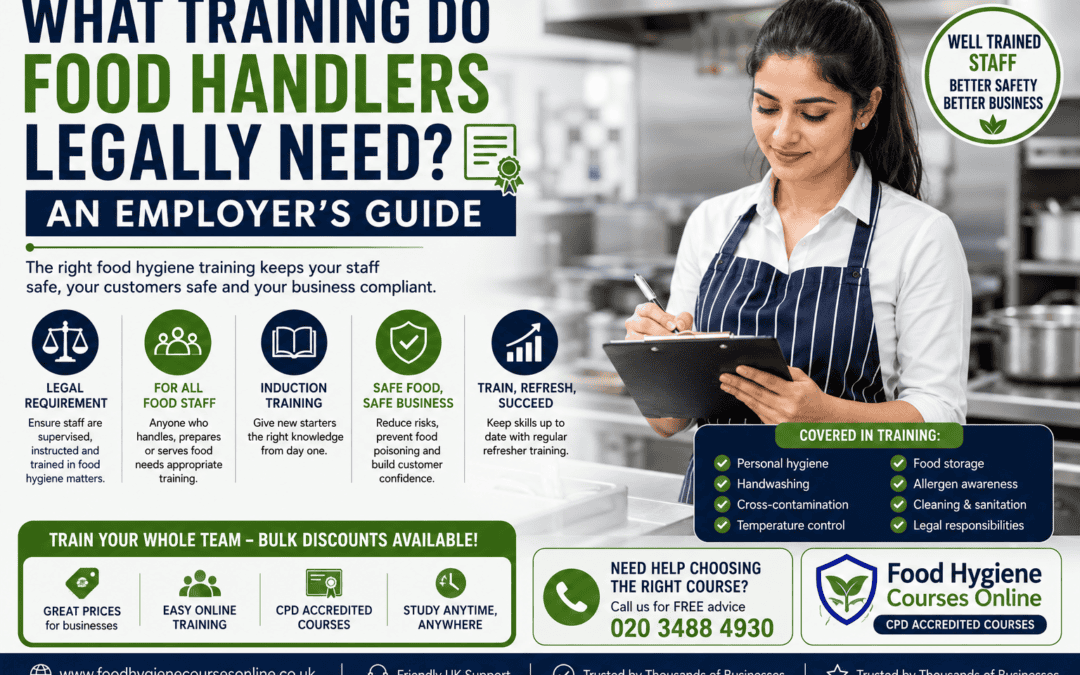
What Training Do Food Handlers Legally Need? An Employer’s Guide
If you employ people who prepare, cook, serve, package or sell food, ensuring they receive the right food hygiene training for staff is one of your most important legal responsibilities. Whether you run a restaurant, café, takeaway, bakery, catering company, nursery, care home or food manufacturing business, properly trained employees help protect your customers, your reputation and your business.
Many employers ask:
- Is food hygiene training a legal requirement?
- Does every employee need a food hygiene certificate?
- Which level of training is appropriate for my staff?
- What should new employees learn during induction?
- How often should staff receive refresher training?
The answers depend on the type of work your employees carry out and the level of responsibility they have. UK food law does not require every food handler to hold a specific certificate, but it does require businesses to ensure staff receive appropriate supervision, instruction and training that is relevant to their role.
At Food Hygiene Courses Online, we provide CPD-accredited online food hygiene courses for individuals and businesses across the UK. If you’re unsure which course your employees need, our experienced team offers FREE course selection advice.
Call us today on 020 3488 4930, and we’ll help you choose the most suitable training for your team.
Is Food Hygiene Training a Legal Requirement?
Yes, but it’s important to understand exactly what the law says.
Under UK food hygiene legislation, food business operators must ensure that food handlers are supervised, instructed and trained in food hygiene matters appropriate to their work activities.
This means employers have a legal duty to make sure staff understand how to handle food safely and reduce the risk of contamination.
The law focuses on competence, rather than simply requiring employees to hold a certificate. A recognised food hygiene course is one of the best ways to demonstrate that staff have received structured and appropriate training.
Providing proper staff food safety training also helps businesses prepare for Environmental Health inspections and demonstrates a commitment to food safety.
Why Food Hygiene Training Matters
Food handlers play a vital role in protecting public health. Poor hygiene practices can lead to food poisoning, allergen incidents, cross-contamination, and enforcement action against the business.
Training helps employees understand how to:
- Wash hands correctly.
- Prevent cross-contamination.
- Store food safely.
- Cook and reheat food to safe temperatures.
- Maintain personal hygiene.
- Clean and sanitise equipment properly.
- Manage food allergens.
- Report illness that could affect food safety.
Well-trained employees are more confident, make fewer mistakes, and help create a stronger food safety culture within the workplace.
For employers, investing in food hygiene training for staff is not just about meeting legal obligations. It can also reduce waste, improve customer confidence, and protect your business from costly mistakes.
Which Employees Need Food Hygiene Training?
Any employee who handles food as part of their job should receive training appropriate to their role.
This may include:
- Chefs
- Kitchen assistants
- Waiting staff who handle food.
- Bar staff preparing food.
- Café employees
- Takeaway workers
- Bakers
- Food delivery preparation staff
- School kitchen staff
- Nursery workers preparing meals.
- Care home catering staff
- Food factory employees
- Mobile catering operators
- Volunteers working with food.
Even employees who only handle wrapped or packaged food may require some level of food safety instruction, depending on their duties.
Employers should assess each role individually and ensure training reflects the level of food safety risk involved.
Understanding Food Handler Training Requirements
The phrase food handler training requirements refers to the level of knowledge and instruction employees need to carry out their duties safely.
There is no single training programme that suits every workplace. Instead, employers should consider factors such as:
- The type of food handled.
- Whether food is high-risk or ready-to-eat.
- The employee’s responsibilities.
- The level of supervision provided.
- The complexity of food preparation.
- The business’s food safety management procedures.
For example, someone preparing sandwiches in a busy café may require more detailed training than an employee who only serves pre-packaged snacks.
The key principle is that training should always be proportionate to the risks involved.
Why Induction Training Is So Important
One of the most common mistakes employers make is assuming that new employees already understand food safety.
Every new starter should receive induction training before handling food independently.
A good induction should cover:
- Personal hygiene expectations.
- Handwashing procedures.
- Uniform and protective clothing.
- Cleaning responsibilities.
- Food storage rules.
- Temperature control.
- Cross-contamination prevention.
- Allergen awareness.
- Reporting illness.
- Workplace food safety procedures.
Induction training helps establish good habits from the very beginning and ensures that new employees understand the standards expected by the business.
Many employers combine workplace induction with a recognised online food hygiene course, providing both practical instruction and structured learning.
Choosing the Right Food Hygiene Course
Selecting the correct course depends on the employee’s role.
For staff carrying out basic food handling duties, Level 1 Food Hygiene is often suitable for introducing essential food safety principles.
Employees who prepare, cook, or serve food regularly will usually benefit from Level 2 Food Hygiene for Catering, which covers food safety responsibilities in greater detail and is widely recognised across the catering industry.
Managers and supervisors typically require more advanced training, such as Level 3 Food Hygiene, because they are responsible for monitoring standards and supervising other employees.
Choosing the right level of training helps ensure employees are competent and confident in carrying out their responsibilities while supporting your business’s legal obligations.
How Often Should Staff Receive Food Hygiene Training?
One of the most common questions employers ask is whether food hygiene training expires or needs to be renewed after a certain period.
In the UK, there is no legal expiry date for a food hygiene certificate. However, employers have a continuing legal responsibility to ensure that staff remain competent and that their knowledge is kept up to date.
As a matter of good practice, many businesses choose to provide refresher food hygiene training every three years, or sooner if:
- An employee changes roles or takes on additional responsibilities.
- Food safety legislation or business procedures change.
- An inspection identifies gaps in staff knowledge.
- New equipment or food preparation methods are introduced.
- There has been a food safety incident or customer complaint.
- Employees have been away from work for an extended period.
Regular refresher training helps reinforce good habits and ensures that staff continue to follow safe working practices.
Why Keeping Training Records Matters
Providing training is only part of your responsibility. Employers should also maintain accurate records of the training employees have completed.
Keeping records can help demonstrate your commitment to food safety during an Environmental Health inspection.
Useful records include:
- Employee training certificates.
- Dates of induction training.
- Refresher training records.
- Attendance logs.
- Staff competency assessments.
- Food safety policy acknowledgements.
Training records provide evidence that your business has taken reasonable steps to ensure employees understand safe food handling procedures.
Training Your Whole Team
If you employ multiple members of staff, delivering consistent training across your business is one of the most effective ways to maintain high food hygiene standards.
Benefits of team training include:
- Consistent food safety knowledge.
- Reduced risk of food contamination.
- Improved customer confidence.
- Better preparation for Environmental Health inspections.
- Easier onboarding of new employees.
- Stronger food safety culture throughout the business.
Whether you operate a single café or manage multiple catering sites, investing in staff food safety training can help protect both your customers and your reputation.
Explore our Business Food Hygiene Training options for organisations looking to train multiple employees:
https://www.foodhygienecoursesonline.co.uk/
We offer flexible online learning, making it easy to train your whole team at a time that suits your business.
Common Mistakes Employers Should Avoid
Even well-managed businesses can make mistakes when it comes to food hygiene training.
Some of the most common include:
- Assuming previous experience removes the need for training.
- Failing to provide induction training for new starters.
- Not keeping records of completed training.
- Providing the same level of training for every employee regardless of their role.
- Forgetting refresher training.
- Not updating staff when procedures change.
- Assuming certificates alone guarantee competence.
Remember, effective training should be supported by regular supervision and good day-to-day food safety practices.
Which Food Hygiene Course Should You Choose?
Choosing the right course depends on the employee’s role and responsibilities.
Level 1 Food Hygiene
Suitable for employees who have limited contact with food or who require a basic introduction to food safety principles.
Level 2 Food Hygiene for Catering
Recommended for most food handlers who prepare, cook, serve, or handle open food regularly.
Level 3 Food Hygiene
Ideal for supervisors, managers, and business owners responsible for overseeing food safety procedures and supervising staff.
Find the right course for your employees:
Level 1 Food Hygiene
https://www.foodhygienecoursesonline.co.uk/product/food-safety-level-1/
Level 2 Food Hygiene for Catering
https://www.foodhygienecoursesonline.co.uk/product/food-hygiene-safety-level-2/
If you’re unsure which course best suits your team, we’re happy to help.
Frequently Asked Questions
Is food hygiene training compulsory for all staff?
Employees who handle food must receive training appropriate to the work they carry out. The law requires suitable supervision, instruction, and training rather than a specific certificate for every role.
Does every employee need the same course?
No. Training should reflect the employee’s duties and level of responsibility. A kitchen assistant, chef and restaurant manager may each require different levels of training.
What should be included in induction training?
Induction training should cover topics such as personal hygiene, handwashing, cross-contamination, temperature control, allergen awareness, cleaning procedures and workplace food safety rules.
Can food hygiene training be completed online?
Yes. Online food hygiene training is widely used by businesses across the UK, provided it is suitable for the employee’s role and supports the employer’s legal training responsibilities.
How often should employers provide refresher training?
Although there is no legal renewal period, many businesses choose refresher training approximately every three years or whenever staff responsibilities or workplace procedures change.
Helpful Resources
For official guidance on food safety responsibilities and food hygiene training, visit:
Food Standards Agency (FSA)
Food Safety and Hygiene (England) Regulations 2013
https://www.legislation.gov.uk/uksi/2013/2996/contents/made
These authoritative resources provide detailed information about food business responsibilities, food hygiene standards, and legal compliance.
Train Your Team with Confidence
Providing the right food hygiene training for staff is one of the simplest and most effective ways to protect your customers, support your employees and strengthen your business.
At Food Hygiene Courses Online, we offer CPD-accredited online food hygiene courses for individuals, small businesses and large organisations throughout the UK.
Whether you need Level 1 Food Hygiene, Level 2 Food Hygiene for Catering, or training for your entire workforce, our experienced team can help you choose the right solution.
Why Choose Us?
- CPD Accredited online courses.
- Flexible learning at your own pace
- Suitable for individuals and businesses
- Business and team training available.
- Friendly UK-based support
- FREE course selection advice
- Bulk enrolment options for employers
🌐 Website
https://www.foodhygienecoursesonline.co.uk/
📞 FREE Course Advice
020 3488 4930
Train your whole team; bulk discounts available.
Not sure which course your employees need? Call our friendly team today for FREE advice. We’ll help you select the most appropriate training based on your staff’s roles and responsibilities, ensuring your business meets food hygiene training expectations while building a safer, more confident workplace.